


Class actions are governed by Rule 23 of the Federal Rules of Civil Procedure, which sets strict requirements for how these cases move forward. One of the requirements is the appointment of class counsel, the attorney or law firm that will represent the entire class.
Making an appropriate choice of an attorney is crucial, as they will strengthen the case and negotiate better outcomes for class members.
This guide explains how to find a lawyer for a class action lawsuit, which factors to consider, and what warning signs to look out for. You’ll also find out how Settlemate helps you claim what you’re owed if you qualify for any existing class actions.
Do you need a lawyer for a class action lawsuit?
Whether or not you need to hire a class action lawsuit lawyer depends on your status within the class.
If you want to participate as a class member in an already certified lawsuit, you usually don’t need to hire your own attorney. The court-appointed class council represents the interests of the entire class.
However, if you want to start a class action lawsuit, you can’t do it without a lawyer. Class actions are highly complex cases, and courts require qualified class action counsel to represent the proposed class.
You may also want to hire your own class action lawsuit attorney if:
- Your financial losses or injuries are significantly greater than those of the other class members, and you are unsure if a settlement can fairly compensate you
- You’re considering opting out of a class action and filing an individual lawsuit or joining a mass tort instead
How to find a class action lawyer and where to look
Finding a class action lawyer is different from hiring an attorney for personal legal matters.
Class actions involve complex procedural rules, significant financial resources, and the ability to represent large groups of people, so not every law firm handles such cases.
You must focus your search on firms with dedicated class action and/or mass litigation practices rather than starting with general legal directories alone.
Here’s how you can conduct your search:
- Search for law firms that specialize in class actions
- Check active class action investigations
- Use legal directories and bar association resources
- Ask for referrals from trusted attorneys
- Use settlement and claim tracking apps and platforms
1. Search for law firms that specialize in class actions
Look specifically for firms that advertise experience in:
- Class action litigation
- Mass torts
- Consumer protection
- Employment laws
- Securities litigation
- Data breach cases
Many firms list their open class action cases on their websites. Review them to determine whether the firm handles issues similar to yours.
You can also use search terms tied to your situation to narrow the results more effectively, for instance:
- Data breach class action lawyer
- Class action attorney for a consumer fraud case
- Employment class action law firm
- Defective product class action attorney
2. Check active class action investigations
Many class action firms actively investigate potential claims before lawsuits are officially filed. If multiple people report similar harm, attorneys may begin gathering evidence to determine whether a class action is viable.
Checking active investigations can help you:
- Find firms already working on similar claims
- Determine whether your issue may qualify for a class action
- Join an investigation before formal litigation begins
This can be useful in cases involving data breaches, toxic exposure, hidden fees, defective products, and misleading advertising.
3. Use legal directories and bar association resources
Legal directories can help you identify attorneys who handle complex litigation and verify that they are licensed in good standing.
Here are some examples of where to look:
4. Ask for referrals from trusted attorneys
If you already have a trusted attorney who manages your personal affairs, but they don’t handle class actions, they may be able to refer you to firms that do. Attorneys often maintain extensive professional networks and can point you toward lawyers with experience in consumer protection litigation, employment class action, or product liability claims.
5. Use settlement and claim tracking platforms
Settlement tracking platforms can help you discover ongoing investigations and open settlements. Identifying existing lawsuits enables you to explore law firms currently handling class action claims and shortlist those relevant to you.
These tools are also useful if you:
- Suspect you were affected by a data breach or a hidden fee scheme
- Want to monitor lawsuits involving specific companies
- Are unsure whether a class action addressing your specific grievance already exists
Warning: No single directory or referral should determine your decision. Online reviews and ratings can help you build an initial shortlist, but they should be combined with independent research and consultation calls.

How to choose a class action lawyer
Once you’ve identified a few potential lawyers for a class action lawsuit, determine which attorney is qualified to handle your case.
Here are eight important factors to consider before choosing a class action attorney:
- Class action experience
- Experience in your type of case
- The firm’s track record
- The firm’s resources and capacity
- Licensing and federal court experience
- Communication and responsiveness
- Fee structure
- Conflict of interest
1. Class action experience
Not every attorney who advertises class action services actually litigates these cases themselves. Some firms collect leads and refer cases elsewhere.
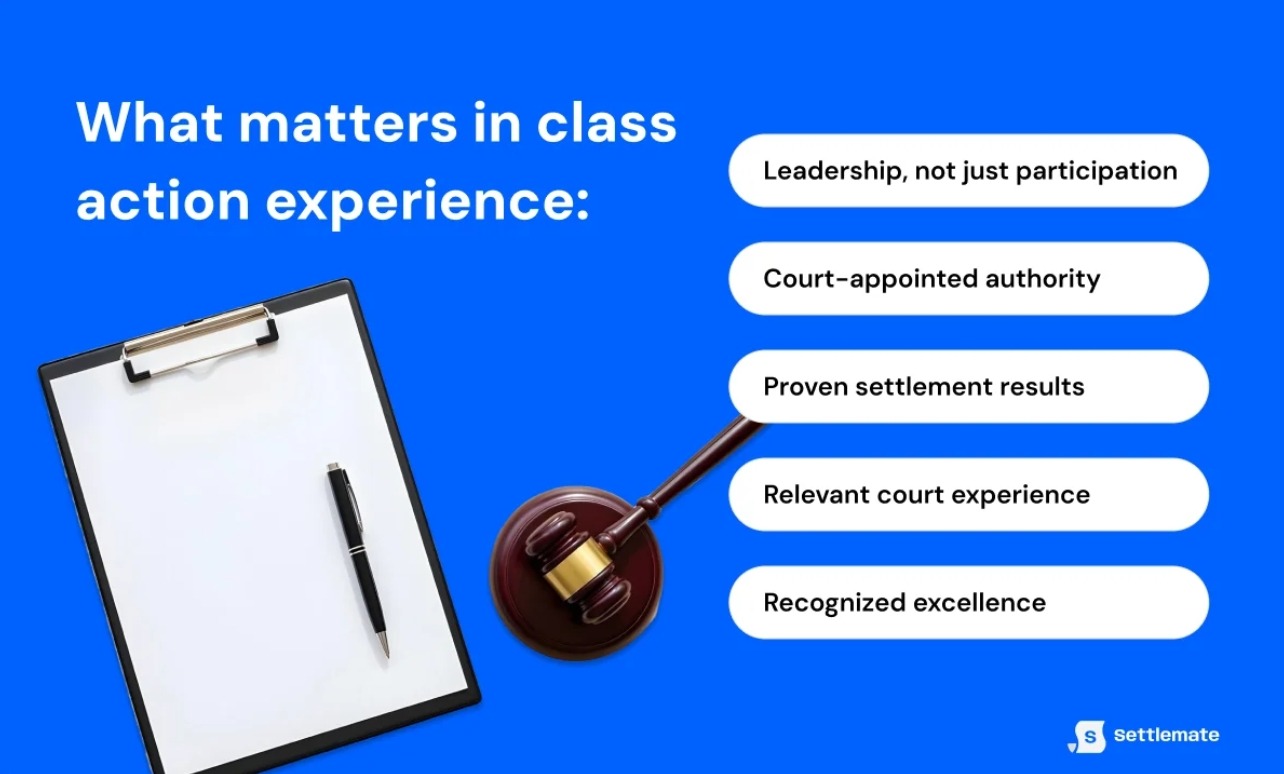
Look for lawyers or firms that regularly serve as lead counsel, co-counsel, or class counsel in active litigations. Attorneys with direct class action experience are more likely to understand:
- Class certification requirements
- Multi-plaintiff litigation strategy
- Settlement administration
- Federal procedure rules
- Large-scale discovery and evidence management
2. Experience in your type of case
Class actions cover a wide range of legal issues, and experience in one area doesn’t automatically translate to another. For example, a firm that focuses primarily on securities fraud may not be the best fit for a faulty medical device or an employment discrimination lawsuit.
Look for attorneys with experience handling claims similar to yours, whether those are:
- Wage and hour disputes
- Toxic exposure claims
- Investor lawsuits
- Privacy violations
3. The firm’s track record
Past results don’t guarantee future outcomes, but they can reveal whether a firm has experience successfully managing large and complex litigation. When reviewing a firm’s history, look beyond large settlement numbers. Instead, consider:
- Whether the firm handled the case directly
- The types of class actions they typically pursue
- Whether they have taken cases to trial
- Their role in major settlements
- The consistency of their results
Additionally, check whether the firm has experience negotiating settlements that provide meaningful compensation rather than minimal payouts with high attorney fees.
4. The firm’s resources and capacity
Class actions can be extremely expensive. They may require expert witnesses, large-scale investigations, electronic discovery tools, medical or financial analysis, and years of litigation before any recovery is realized.
A smaller firm isn’t automatically a bad choice, but it should have sufficient staff, funding, and infrastructure to handle large-scale cases effectively. During consultation, ask questions such as:
- Who will work on the case day-to-day?
- Does the firm have trial experience?
- Will outside firms or co-counsel be involved?
- How many active class actions are you currently handling?
This can help you determine whether the firm has the bandwidth to give adequate attention to your case.
5. Licensing and federal court experience
Because many class actions are filed in federal court, it’s important to choose a lawyer familiar with federal litigation procedures. You should verify that:
- The attorney is licensed and in good standing
- The attorney hasn’t faced disciplinary action
- The firm has experience handling cases across multiple jurisdictions
The last point is especially important for nationwide class actions involving plaintiffs from multiple states.
6. Communication and responsiveness
A class action attorney should:
- Explain legal concepts clearly
- Respond to questions within a reasonable timeframe
- Keep you informed about major developments
- Be transparent about risks and timelines
- Make it clear who your primary contact person will be
If a firm is difficult to reach during the consultation stage, communication issues may continue during the litigation process.
7. Fee structure
Most class action lawyers work on a contingency fee basis, meaning they only get paid if the case succeeds through a settlement or verdict.
Before signing a representation agreement, make sure you understand:
- What percentage of the settlement the firm will take
- If litigation expenses are deducted separately
- What happens if the outcome is unsuccessful
- Whether you owe any costs directly
- Who pays for expert witnesses or investigations
8. Conflict of interest
Class actions often involve powerful corporate entities and financial institutions facing collective claims from thousands of affected individuals. Because of the magnitude of these cases, ensure you find a class action lawyer who can fully and impartially advocate for the class.
A conflict of interest arises when a lawyer or firm has a relationship with the defendant or another party involved in the case that could affect their judgment or loyalty. Even indirect ties matter in complex litigation.
Before hiring a class action attorney, confirm that they:
- Have no current or past professional relationship with the defendant
- Are not representing or being paid by the opposing party in any related matter
- Don’t have financial interests that could influence their decisions in the case
- Have no personal or business connections that could divide loyalties
A conflict of interest creates ethical concerns and can limit how aggressively a case is pursued. It can also lead to a firm being removed from the case.
A reputable attorney should be transparent about potential conflicts of interest and able to clearly explain that they have no competing obligations preventing them from representing the class.
Red flags to look out for when hiring an attorney for a class action lawsuit
The consultation process can reveal a lot about how a law firm operates. Be cautious if a lawyer:
- Guarantees a specific payout or outcome
- Pressures you to sign immediately
- Avoids discussing fees directly
- Gives vague answers about their experience
- Can’t explain who will actually manage your case
- Seems unfamiliar with cases similar to yours
Class actions are unpredictable, and experienced attorneys are usually careful not to make unrealistic promises early in the process.
Tip: Class action litigation can take years to resolve, especially if the case involves appeals or certification disputes. A firm’s experience and resources matter, but so does trust. You should feel comfortable asking questions and discussing concerns with your legal team throughout the process.
Do you need a lawyer to file a class action claim?
When a class action begins, all potential claimants are automatically included in the class. If you receive a notice about a settlement involving charges such as hidden banking fees, a defective product, or a health data breach, you usually don’t need a lawyer to receive compensation. You can typically submit a claim directly through the official settlement administrator.
In most cases, you only need to:
- Confirm you’re part of the affected group
- Submit a short online or paper form
- Provide basic supporting information
Once the claim is submitted, the administrator handles eligibility checks and payout distribution.
While the process is simple in theory, many people never claim the compensation they’re eligible for. Some of the most common reasons include:
- Missing deadlines
- Not realizing they’re eligible
- Not knowing what information is required
- Lacking the necessary documentation
- Not knowing if a settlement is legitimate
- Difficulty tracking multiple claims across different cases
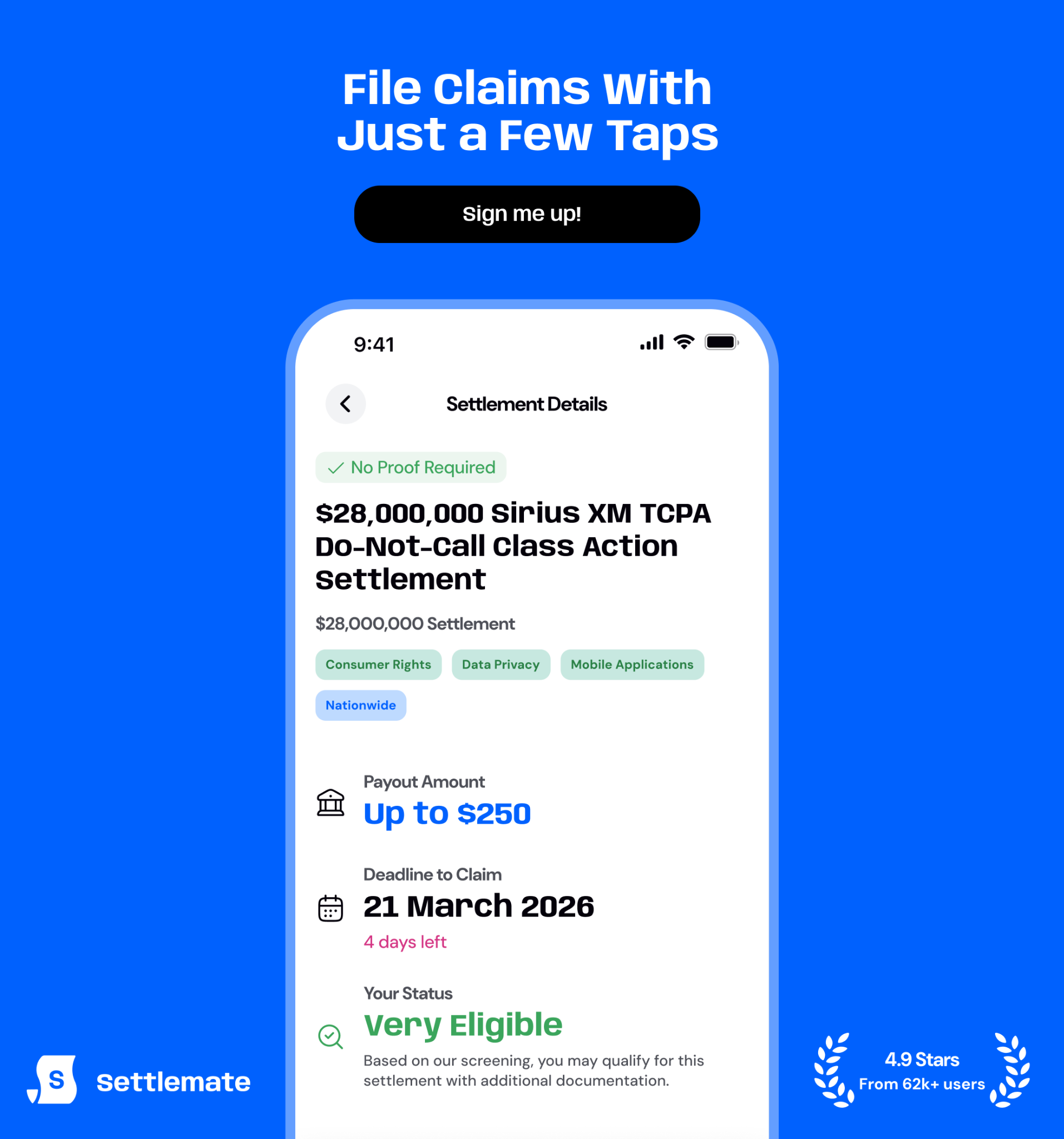
Settlemate solves these issues and helps you file a claim in minutes.
How Settlemate helps you claim class action payouts
Keeping up with class action settlements can be surprisingly difficult. Notices get missed, deadlines pass, and many eligible claims never get filed.
Settlemate simplifies the entire process by helping you track and act on potential class action claims. You only need to connect your email with the app to automate the next steps:
Get started by downloading the Settlemate app from the App Store or Google Play, or sign up via the web app. Create an account and immediately see which class action you qualify for.
There’s little risk in trying Settlemate thanks to our robust Value Guarantee. If your membership doesn’t deliver enough verified value to cover what you paid in your first 12 months, we’ll give you more time with complimentary extensions until you reach that value.
FAQs
Is it worth filing a class action lawsuit?
It can be. Class actions are for cases involving a sizable group of people harmed in a similar way, where individual losses may not be significant enough to justify separate lawsuits. By combining claims, plaintiffs can hold large entities accountable and reduce legal costs.
However, outcomes vary. Some cases lead to substantial compensation, while others result in smaller payouts.
Is there any reason not to join a class action lawsuit?
In most cases, class actions are convenient, low-risk, and low-effort, but they aren’t always the best fit for every situation.
If your individual damages are higher than the others’, a separate lawsuit or a mass tort may be a better option. You may also consider opting out of a class action if you want full control over your case strategy and settlement decisions.
How much do lawyers charge for a class action lawsuit?
In most cases, there are no upfront costs when filing a class action lawsuit. The lawyers are paid a percentage of the settlement or court award if they win the case. That percentage usually falls within a court-approved range and is taken directly from the total recovery before it’s distributed to class members.
Litigation costs, such as expert reports or court filings, may also be deducted from the final settlement, depending on the agreement.
If the outcome of the case is unsuccessful, you generally don’t owe attorney fees.