


It’s happened to many of us. A subscription you never signed up for, a product that didn’t work as promised, or personal or health data exposed in a breach.
Then, you realize that thousands of people are dealing with the exact same problem, and there’s a lawsuit going on against the company. Naturally, you start wondering whether you should join the class action and let someone else handle the case, or file a separate lawsuit and go after compensation on your own.
This guide explains the key differences between a class action and individual lawsuit and helps you decide which option is best for your situation.
What is a class action lawsuit?
A class action lawsuit allows a group of people with similar claims to bring a case together against the same entity.
Rather than filing separately, one or a few individuals act as representatives for the entire group. Their attorneys handle the case on behalf of all affected people, and any resolution, whether an approved settlement or a court judgment, applies to everyone included in the class.
The idea is to make legal action practical when individual claims are too small to pursue alone. Therefore, instead of managing thousands of separate lawsuits, the court consolidates all claims into a single, coordinated process.
Because the case is built around shared harm, compensation is usually distributed equally among all participants within the same tier; for example, the lead plaintiffs typically receive a larger portion to account for their effort. Standardized distribution ensures the efficiency of the process, but often results in smaller payouts.
Before a class action can begin, all potential plaintiffs receive a notification about the start of the proceedings. They can then decide if they want to join or opt out of a class action and pursue an individual lawsuit.
Pros and cons of a class action lawsuit
A class action makes legal proceedings more straightforward and accessible, but it comes with trade-offs.
Here’s a quick overview of the key benefits and drawbacks of class actions:
What is an individual lawsuit?
An individual lawsuit involves taking legal action independently. By pursuing a case with your own attorney, evidence, and strategy, you retain the decision-making authority over:
- Whether to move forward with the case or settle
- How your case is presented
- What outcome you’re willing to accept
The outcome of the case applies solely to you, whether that’s a settlement or court judgment.
Your compensation isn’t tied to anyone else’s claim either. It’s determined entirely according to your specific damages, the strength of your evidence, and the extent of the harm you suffered.
That’s why individual lawsuits can lead to higher payouts, especially when the harm is significant and clearly documented.
Note: There is also a middle option called a mass tort. In this case, many individual lawsuits are grouped together when people are harmed by the same defendant, but each lawsuit is treated separately, and compensation is individualized. Understand the difference between a mass tort and a class action in our comprehensive guide.
Pros and cons of an individual lawsuit
The control an individual lawsuit provides has its benefits, but this route requires more time, effort, and involvement.
Below are the most notable pros and cons of filing an individual lawsuit:
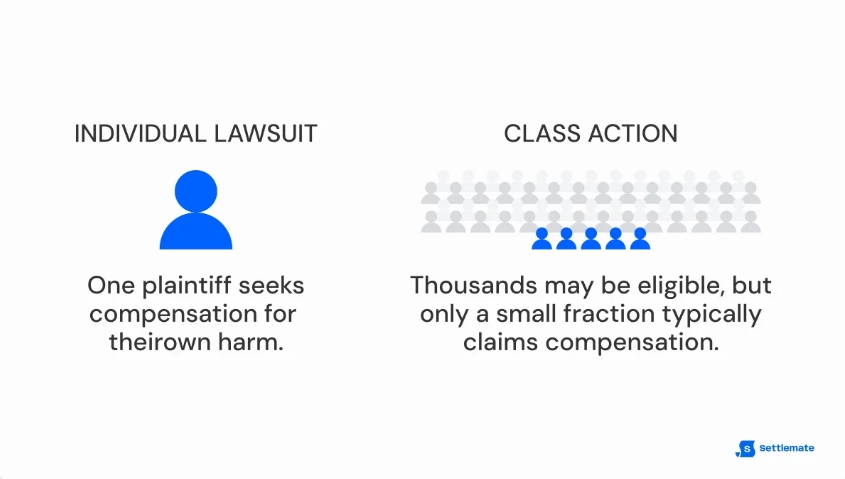
Individual lawsuit vs. class action comparison across key factors
Both an individual lawsuit and a class action can help you recover compensation for damages or harm, but it’s important to see how these legal proceedings compare in terms of:
- Risks
- Costs
- Compensation calculation
- Timeline
Class action vs. individual lawsuit risks
The level and type of risk are significantly different depending on the path you choose. Here’s a quick overview:
Class action lawsuit vs. civil lawsuit costs
Costs are among the greatest deciding factors when choosing between class actions and individual lawsuits. More specifically, having to cover all legal fees is an important consideration when deciding whether to pursue an individual lawsuit.
Here’s what you might expect in both cases:
Compensation calculation
In class action lawsuits, participants receive uniform or tiered awards regardless of the minor differences in their individual experiences. If your case is unique, you might get significantly higher compensation in case you decide to file an individual lawsuit.
Here’s how compensation in both cases works:
Timeline
Both class actions and individual lawsuits are typically lengthy processes. However, the duration of each depends on multiple variables, including:
- Size of the case
- Complexity of the case
- The defendant’s willingness to settle
The table below can help you understand what can impact the duration of each legal process.
Class action lawsuit vs. individual: Which is right for you?
The choice between a class action and an individual lawsuit comes down to three questions:
- How much is your claim worth?
- How strong is your evidence?
- How involved do you want to be in the process?
An individual lawsuit is the better choice when your losses are substantial or your case stands out from the rest. For instance:
- You experienced significant financial or physical harm.
- Your situation has unique details.
- You have strong evidence to support your claim.
- You’re willing to be actively involved in the process.
A class action makes the most sense when your individual damages are relatively minor and not worth pursuing on your own. It is usually the better option in the following situations:
- You lost a small amount of money.
- Your situation is nearly identical to many others.
- You don’t have strong documentation to support your claim.
- You prefer a more hands-off process.
However, most people don’t realize that, in many cases, you don’t actually need to choose between a class action and an individual lawsuit. You may already qualify for compensation and are simply not aware of it.
Settlemate is one of the best apps that can identify relevant class action settlements you qualify for and help you submit claims in minutes.
How Settlemate helps you claim money from class actions automatically
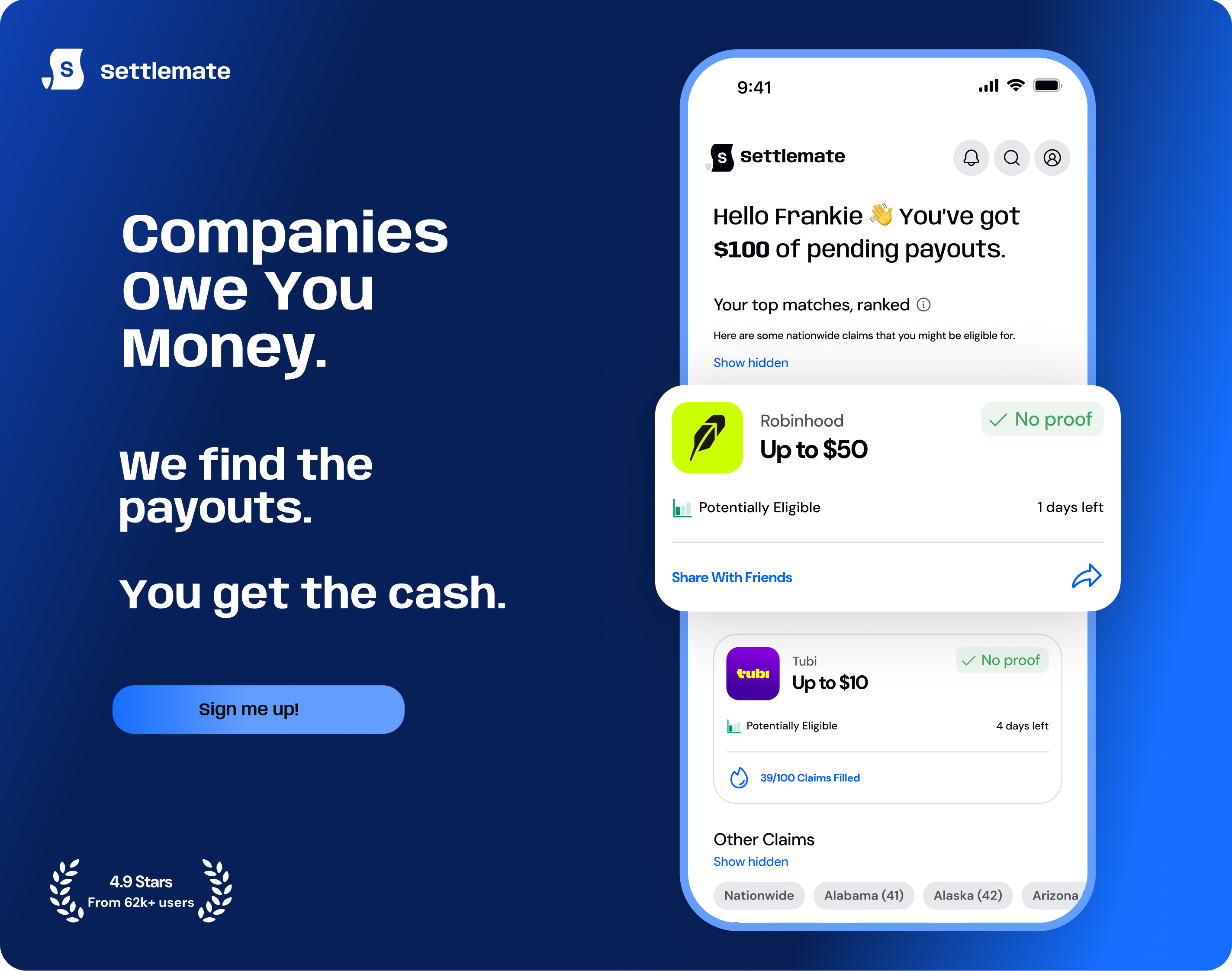
Class actions are frequently initiated, but they don’t automatically reach everyone who qualifies. Even though companies are required to provide notice, those messages often go undetected, get buried in emails, or don’t reach every affected person.
And even if you do find out about a settlement, there are still multiple steps between eligibility and receiving a payout:
- Understanding what applies to you
- Providing basic information
- Completing the claim form
- Submitting before the deadline
Each step adds friction, which is why the median class action claim rate is only 9%.
Settlemate turns scattered notices, manual searches, and complicated forms into an automated process that surfaces eligible claims and guides you through filing them in minutes.
Here’s how it works:
- Settlemate analyzes your purchase history and emails with your permission.
- The app flags class action settlements you may qualify for.
- It reduces manual effort by completing much of the claim for you.
- Settlement lets you know what kind of proof is required for each claim.
- The app keeps you updated on deadlines, claim status, and newly available settlements in one place.
To get started, download Settlemate from the App Store or Google Play and set up your account.
Settlemate’s Value Guarantee means we’re committed to helping your membership pay for itself. If it hasn’t after a qualifying year, we can extend your membership at no cost every 12 months until it does.
Frequently asked questions
Is a class action lawsuit a civil lawsuit?
Yes, a class action lawsuit is a type of civil lawsuit. It falls under civil litigation because it involves parties (people or groups) seeking compensation from another party, usually a company, rather than criminal penalties.
Who usually wins in a class action lawsuit?
Most class actions end in settlements rather than trials, meaning that both sides agree on compensation without a formal admission of wrongdoing by the defendant. When cases go to trial, outcomes depend on evidence, legal arguments, and the strength of the claims.
Do you pay taxes on a class action settlement?
Yes, you generally pay taxes on a class action settlement if it replaces taxable income, such as lost wages or punitive damages. However, settlements for physical injury or illness are typically not taxable. If the settlement payment is subject to taxation, you should generally report it as “other income” on your tax return.
You can find detailed information about the tax implications of settlements on the IRS website.